Posts

I don't like my teen's friends. Is there anything I can do?
Image
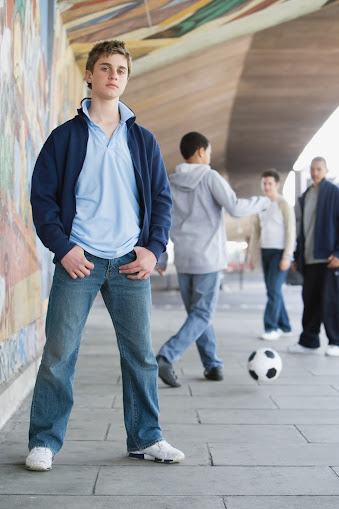
It's much easier to monitor your child's friendships when they're attending primary school. At that age they're still far more likely to tell you more about their mates and, for the most part, they still really care about what you think. When combined with their reliance on you getting them to where they want to go as well as stronger parent networks that exist in the primary years, it becomes a lot easier for you to keep your child away from other children that you simply don't like that much. Finding your teen beginning to hang out with a new group of friends can happen at anytime and be due to a range of reasons, most of which parents have little or no control over, but it is when they make the transition to secondary school that you're likely to see the biggest change. This is a time that requires all students (whether new to the school or not) to establish new peer groups. A significant number of new students enter the year group and there's a change in...

4 lines your teen is likely to throw at you when it comes to alcohol and parties and 4 responses to throw back!

Image
Adolescents can be masters at getting what they want when it comes to their parents. This can be achieved in many ways, with some of the best including  'siloing' or isolating one or more of their parents (from each other and from other adults) and then setting them up against each other, throwing as many guilt trips on them as possible and hoping at least one of them sticks and, of course, one of their favourites, comparing you to other parents who apparently let their teens do whatever they want, whenever they want to do it ... As I've written many times before, when it comes to making rules for your child around alcohol and parties only you can make those decisions. No so-called 'expert' can (or should) be making those choices for you and more fool you if you start listening to your best friend or a relative about what you should or shouldn't be doing in this area. My best advice is to get the best quality and up-to-date information on the topic and then ...

"But alcohol is much worse than cannabis" and what about 'responsible drug use'?: Responding to a 16-year-old's email

Image
I haven't posted a blog entry for quite a while. With all the different COVID-19 restrictions in place across the country it became extremely difficult to put together an article that applied to all. Now that things have settled down a little, hopefully I'll be able to get a few pieces out over the next couple of weeks that may assist parents across the upcoming holiday period. In the meantime I thought I would share an email I received from a young man and my response to him regarding a disagreement he was having with his parents ... "Hi Paul, I am 16 year old male and have been having a disagreement with my parents. They have read your book and they have also heard you speak a number of times. I have done copious amounts of research that suggest drugs such as cannabis and psilocybin are relatively safe drugs to use in moderation. I completely agree that regular use is unsafe for a developing brain, but my usage of cannabis had only been occurring about once every 10 week...

Vaping: Sorting out 'fact from fiction' for those parents struggling with the issue

Image
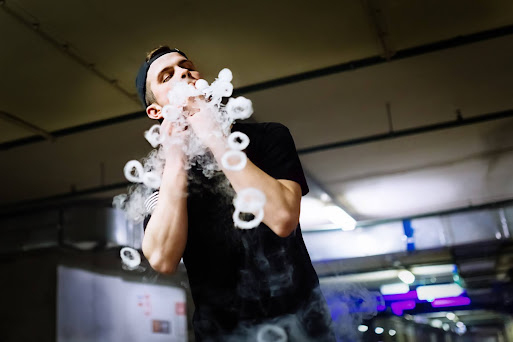
I've written a number of articles about vaping in the past, the first in 2014. Back then I was beginning to receive messages from schools across the country asking for advice on how to deal with the use of electronic cigarettes, or e-cigarettes as they are better known. Students were beginning to bring these devices to school and teachers, not surprisingly, knew little about them. In 2018 I wrote another piece, this time in response to concerned parents who had stumbled upon these devices in their child's bedroom. When they had confronted them about what they had found they were usually met with comments like "But it's only vaping" or "At least I'm not smoking" and had no idea how to respond. Last year I posted another article about a mother who sent me an invitation to a 15 th birthday party her son had received that included a 'No vaping' message as a condition of entry. She was used to seeing 'Strictly no alcohol' on invitations...

Teens lack an effective brain 'braking system' putting them at greater risk of dangerous behaviour once restrictions ease: Be a parent and keep them safe

Image
As the COVID-19 restrictions ease across the country we're beginning to see Australians, both young and old, being able to socialise a little more freely on a Saturday night. All states and territories are now allowing people to now have others visit their home, with numbers varying (5 to 20 people depending on where you live, apart from NT where are now no limits on numbers). When it comes to teenage parties, however, it is likely to be quite a while before parents will be permitted to host such events, regardless of where you live in the country, with the Australian Government-funded  HealthDirect website stating the following: "Even though some of these restrictions are easing under the Australian Government's 3-step plan to reopen the economy, you should continue to practise physical distancing and good hygiene. Large social events, such as parties, should not take place at this time." So for the foreseeable future we really are looking at the most that und...

Alcohol, teens and socialising: Being prepared for parenting post-COVID-19

Image
Over the past couple of weeks I've written about the challenges facing teens and their parents during the COVID-19 restrictions. It's been (and will continue to be) a tough time for everyone, particularly in regard to social isolation and as I've said previously we are in completely uncharted territory and still have little idea about what comes next. In a feature in The Lancet published a couple of weeks ago the author, Joyce Lee wrote "... not much is known about the long-term mental health effects of large-scale disease outbreaks on children and adolescents."   She ended the piece by stating we needed to support young people through this period but there is also "a need to monitor young people's mental health status over the long-term, and to study how prolonged school closures, strict social distancing measures, and the pandemic itself affect the wellbeing of children and adolescents."  What will the impact be on our young people and how wil...

COVID-19 restrictions and their impact on teens, most particularly Year 12 students

Image
COVID-19 represents an unprecedented challenge to families around the world. UNESCO estimates that there are currently 1.38 billion children out of school or child care, without access to group activities, team sports, or playgrounds. In a letter published in The Lancet  earlier this month the authors wrote that families are "living with increased stress, media hype, and fear, all challenging our capacity for tolerance and long-term thinking"  and sadly, as they stated, there is no clarity on how long the situation will last. Social distancing has been introduced to slow the spread of the virus and it certainly appears that the restrictions that have been put into place across the country have been effective in 'flattening the curve' (won't we all be so happy never to hear that phrase again once this is all over?). We've been told to 'stay home' and it would seem that a majority of the Australian population have heeded the call. Living in isola...